
What AAPEX Is
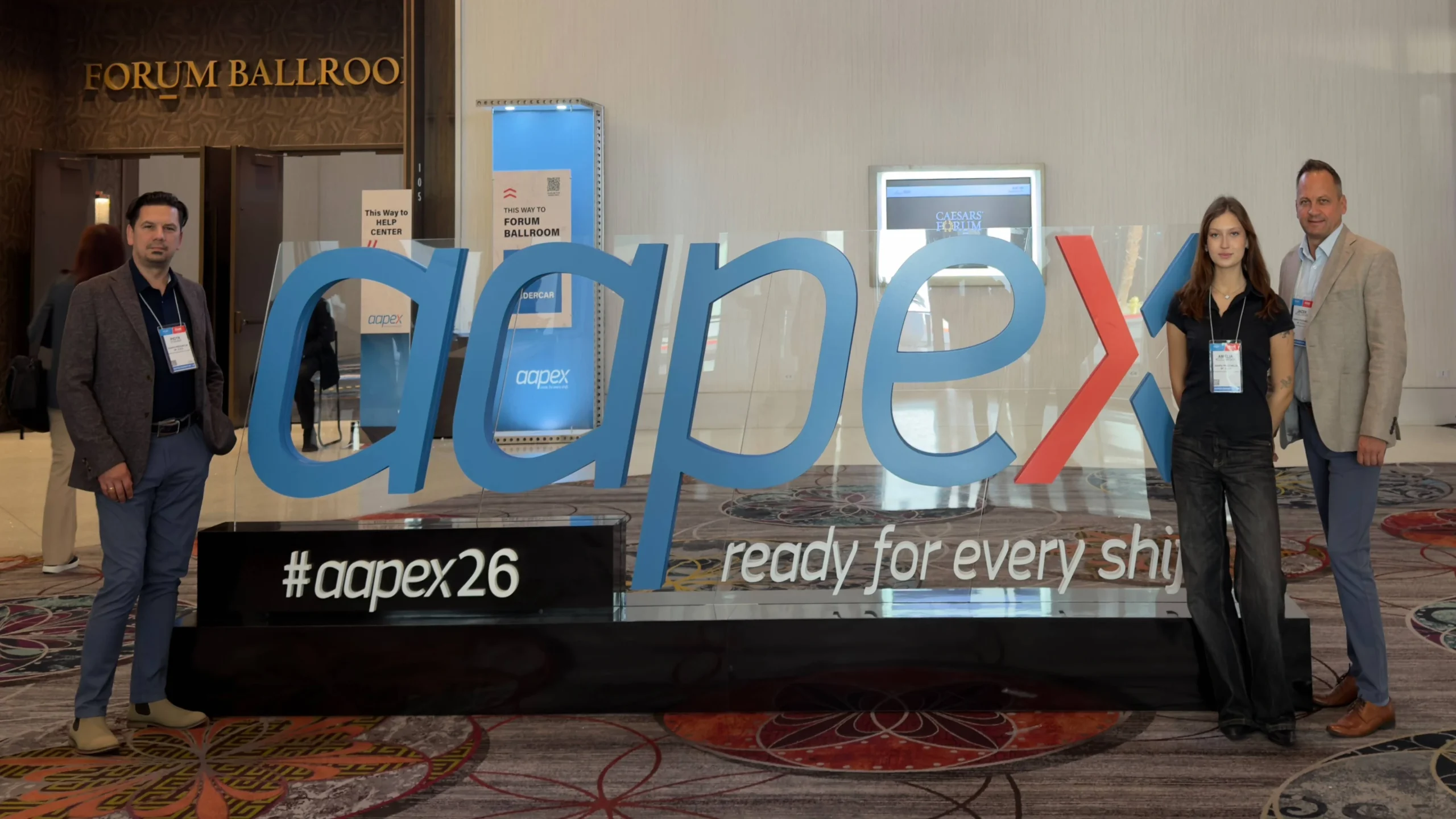
AAPEX is a trade-only fair, closed to the public. The organisers, the Auto Care Association and MEMA Aftermarket Suppliers, speak of more than 60 years of history and of one of the longest-running and largest automotive aftermarket events in the Western Hemisphere. According to the organiser, the fair attracts about 45,000 attendees and more than 2,500 manufacturers and suppliers, who present more than 1,400 product categories across 550,000 square feet (about 51,000 m²).
The exhibitors include suppliers, manufacturers, remanufacturers and technology solution providers. On the other side are the buyers: service and repair shops, parts retailers, independent warehouse distributors, buying groups, service chains, dealers and fleet buyers. From a single hall, then, you can see the whole supply chain, from the manufacturer to the company that fits the part into a car.
This year the organisers introduced changes. A new building, the AAPEX Forum, was added to the Venetian Expo, and exhibitors were arranged into dedicated themed sections, which is meant to make it easier for buyers to find manufacturers in a specific category. Away from the show floor there were training sessions and appearances by people known from sport and film. The keynote breakfast was headlined by coach Mike Krzyzewski, with a talk titled “Victory through Teamwork and Leadership”. On the AAPEX Forum stage there was a conversation with Mark Wahlberg: 30 minutes of questions from a moderator and a 45-minute photo and autograph session. The organisers also announced appearances by, among others, Barry Sanders, Jimmie Johnson, Mia Hamm, Randy Johnson and Grant Hill.
Guapa Clean Up at the AAPEX Forum
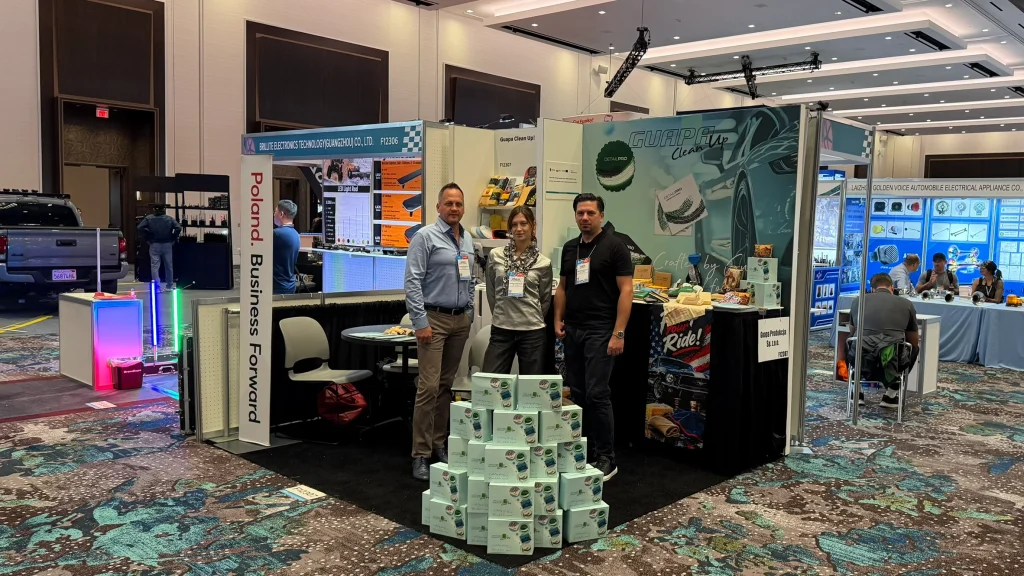
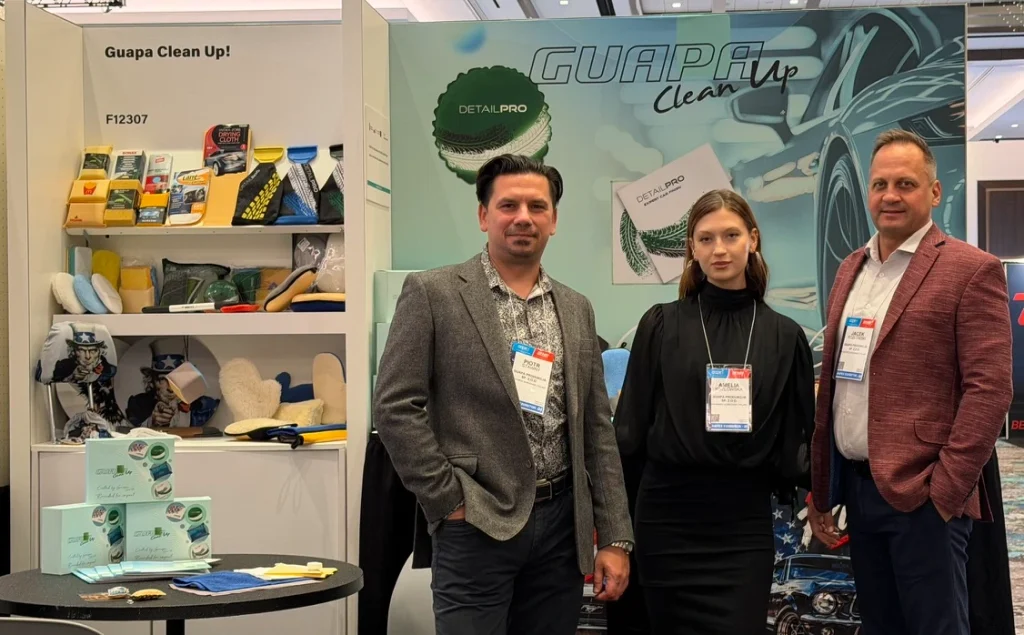
Our stand, F12307, was in the AAPEX Forum (Caesars Forum), in the Accessories | Lighting section. Our neighbours were mainly companies from the lighting industry, which was a good opportunity to see how many everyday problems faced by drivers and workshops can be solved with well-chosen technology.
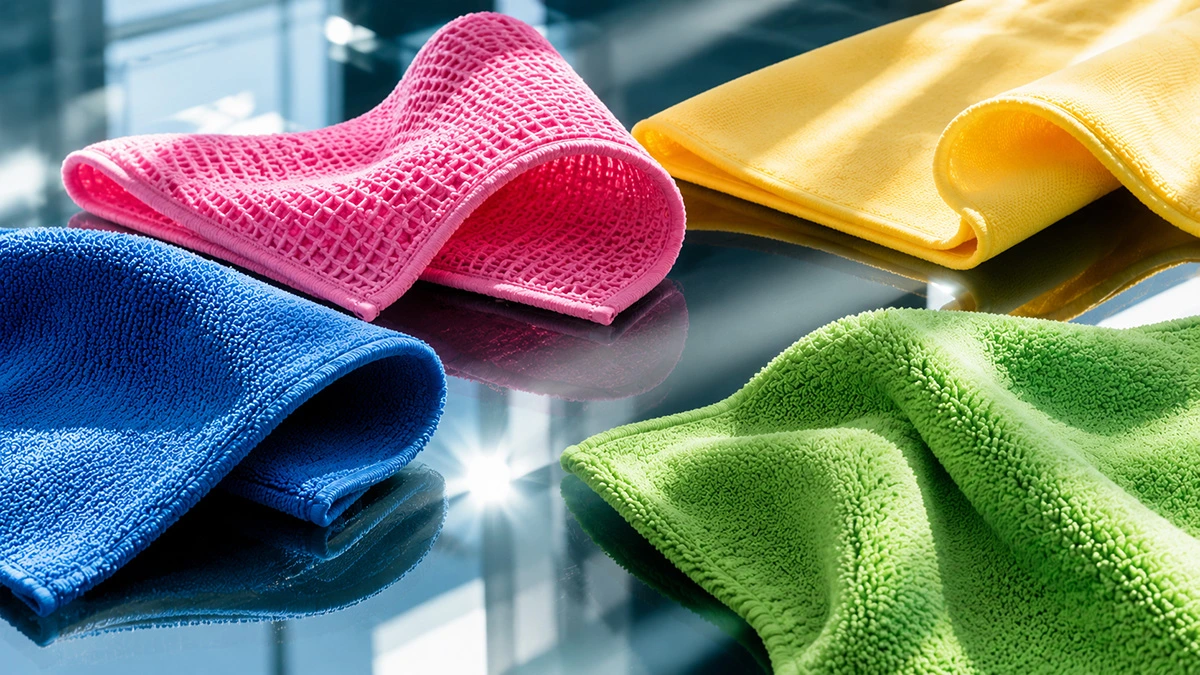
The products that drew the most attention were those on which everyday car care rests: sponges, microfibre pads for small mops and, more broadly, accessories for detailing and car cleaning. These are products used in large quantities and replaced regularly, so for distributors and private label owners they mean steady, repeat sales rather than a one-off purchase. At the same time, they are simple in construction, which makes it easy to put your own brand on them: colour, print and packaging decide how the product looks on the shelf. Detailing, that is, careful, multi-stage care of paintwork, windows and interior, in turn requires tools that do not scratch surfaces and absorb water well, so the quality of a sponge or a microfibre pad matters more here than one might think.
What We Were Asked at the Stand
We were visited by distributors, private label owners and importers, largely from other countries. Two questions came up most often: where the raw materials come from and whether we sew everything ourselves. The answers show well how private label production works from the manufacturer’s side.
What Private Label Production Is
A private label is a product made by a manufacturer but sold under the brand of the customer who ordered it. For a distributor or retail chain, it is a way to have its own product line without building a production base. For the manufacturer, it is a project carried out together with the client, in which both sides decide the look and quality of the product.
From Idea to Delivery
We agree every project individually, because the starting point differs. Sometimes the client already has a finished graphic design, and we send samples with the print straight away. At other times we start with samples of the material alone or of the “bare” product, without print. We start production only after the green light from the client, that is, after the samples have been approved. This is a safeguard for both sides, because the client assesses the result before a decision is made on the whole batch. We check quality during production, and we ship the finished product to the client.
What Can Be Changed in a Product
For many visitors, the biggest surprise was the wide range of products and the possibility of personalising practically every element. With us, you can change the shape and size, the colours of the cloths, the sublimation print, the packaging and the labels.
It is worth knowing what sublimation printing involves. The dye is transferred from paper to the material under heat and pressure and penetrates the fibres instead of sitting on their surface. This applies to materials made of synthetic fibres, most often polyester. As a result, the print is resistant to abrasion and washing, which matters for products that are used and washed every day.
The minimum order is, in most cases, 500 pieces. Lead time depends on the project.
Where the Raw Materials Come From
Questions about local origin, that is, about the Polish and European origin of raw materials and production, came up most often. If so, for many buyers it is an important factor in their decision.
The raw materials we produce from come from Europe. The exception is natural leather: the chamois from which our natural chamois cloths are made comes from New Zealand. Chamois has long been a classic for drying car bodywork and windows, because it is very absorbent. [It would be worth adding here where the product is sewn and finished.]
After the Fair
We are returning from Las Vegas with new contacts: clients, cooperation proposals and acquaintances with representatives of other brands. We will describe the details of cooperation on a partners’ page that will soon appear on our website. Our first time at AAPEX was a good test for us, because the questions we heard showed what matters to buyers and gave us several topics to develop.