
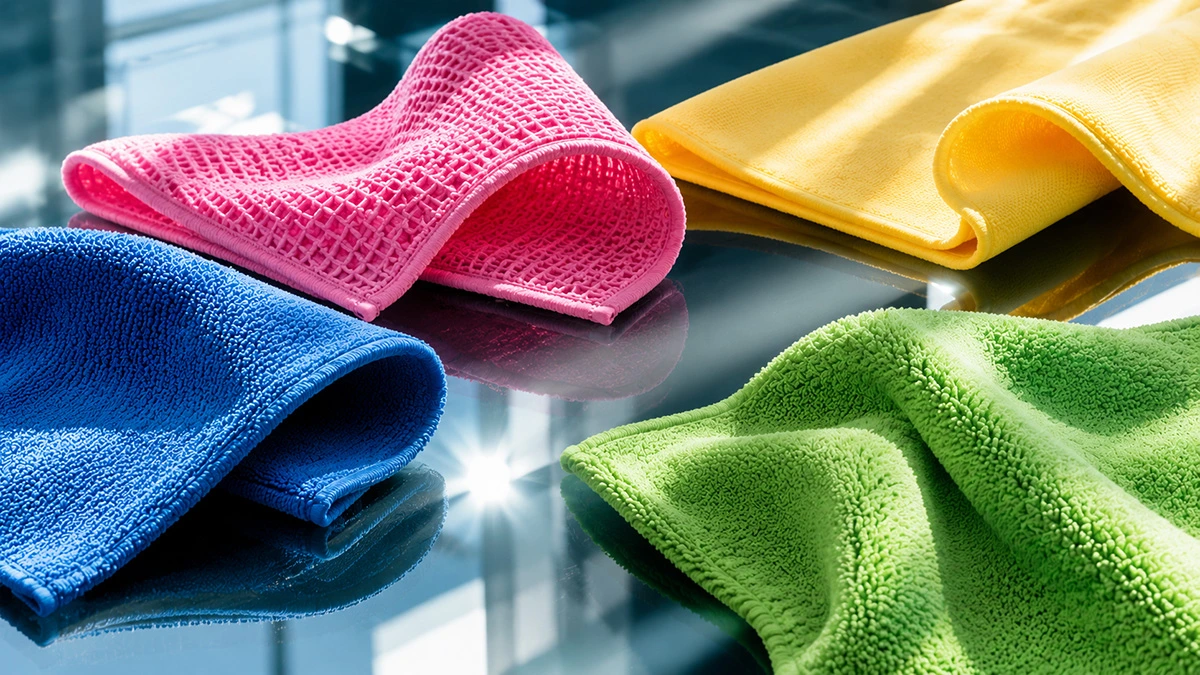
Microfiber is one of the most popular materials used for cleaning cars, windows, screens, and household surfaces. Although most microfiber cloths look similar at first glance, the differences between them can be significant. They affect not only user comfort but also cleaning efficiency, product durability, and the safety of delicate surfaces.
So, how do you choose the right microfiber cloth? What should you pay attention to when making a purchase? In this guide, we answer these questions.
Why Not All Microfiber Cloths Are the Same
Microfiber is made from extremely fine synthetic fibers, most commonly polyester and polyamide. The combination of these materials is responsible for the cleaning performance, absorbency, and softness of the product.
In practice, two cloths may look almost identical while performing very differently during use. One may effectively remove dirt and water, while the other may leave streaks, shed fibers, or quickly lose its properties after only a few washes. That is why it is important to pay attention to several key parameters when choosing a microfiber cloth.
GSM Weight - The First Indicator of Quality
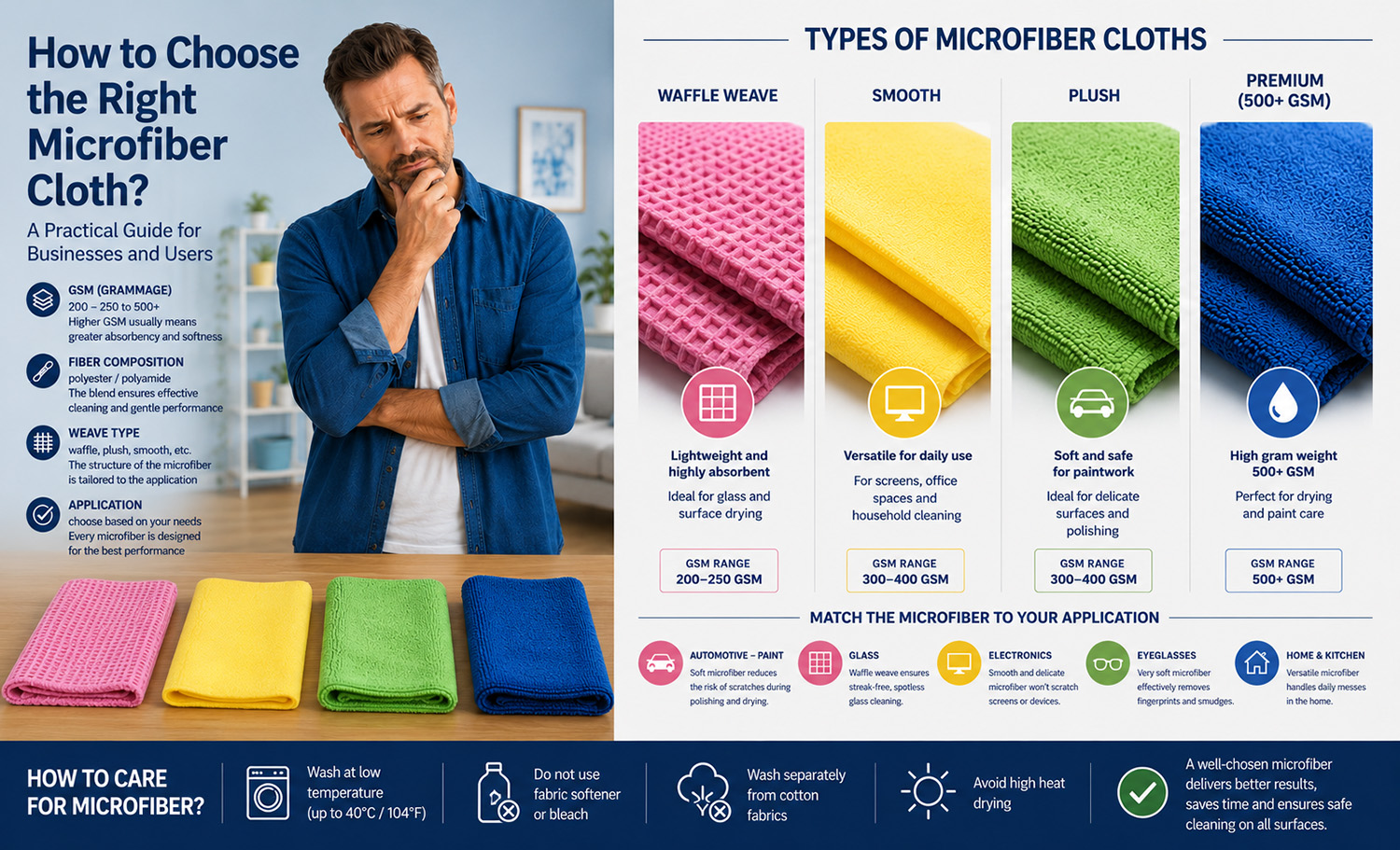
GSM (grams per square meter) refers to the weight of the material per square meter and is one of the most important indicators of microfiber quality. Generally, the higher the GSM, the thicker, softer, and more absorbent the microfiber cloth.
Typical Applications:
- 200-250 GSM - lightweight cloths for glass and screens,
- 300-400 GSM - versatile microfiber cloths for everyday use,
- 500 GSM and above - premium products designed for paintwork care and surface drying.
However, a higher GSM does not always mean a better choice. The most important factor is selecting a product that matches the intended application.
Fiber Composition: Polyester and Polyamide
The most common fiber ratios are:
- 80% polyester / 20% polyamide
- 70% polyester / 30% polyamide
Polyester is responsible for effective dirt removal, while polyamide increases absorbency and softness. Microfiber cloths with a higher polyamide content are generally gentler on surfaces and perform particularly well when used on automotive paintwork, glass, and electronic devices.
The Importance of Weave Structure
Not all microfiber cloths have the same texture or weave. The most popular types include:
Waffle Weave Microfiber
Its characteristic waffle-like pattern increases the material's absorbent surface area. It is an excellent choice for cleaning glass and drying surfaces.
Plush Microfiber
Its soft and fluffy texture makes it ideal for automotive paint care and other delicate surfaces.
Smooth Microfiber
A versatile option for everyday cleaning, screen maintenance, and office surfaces.
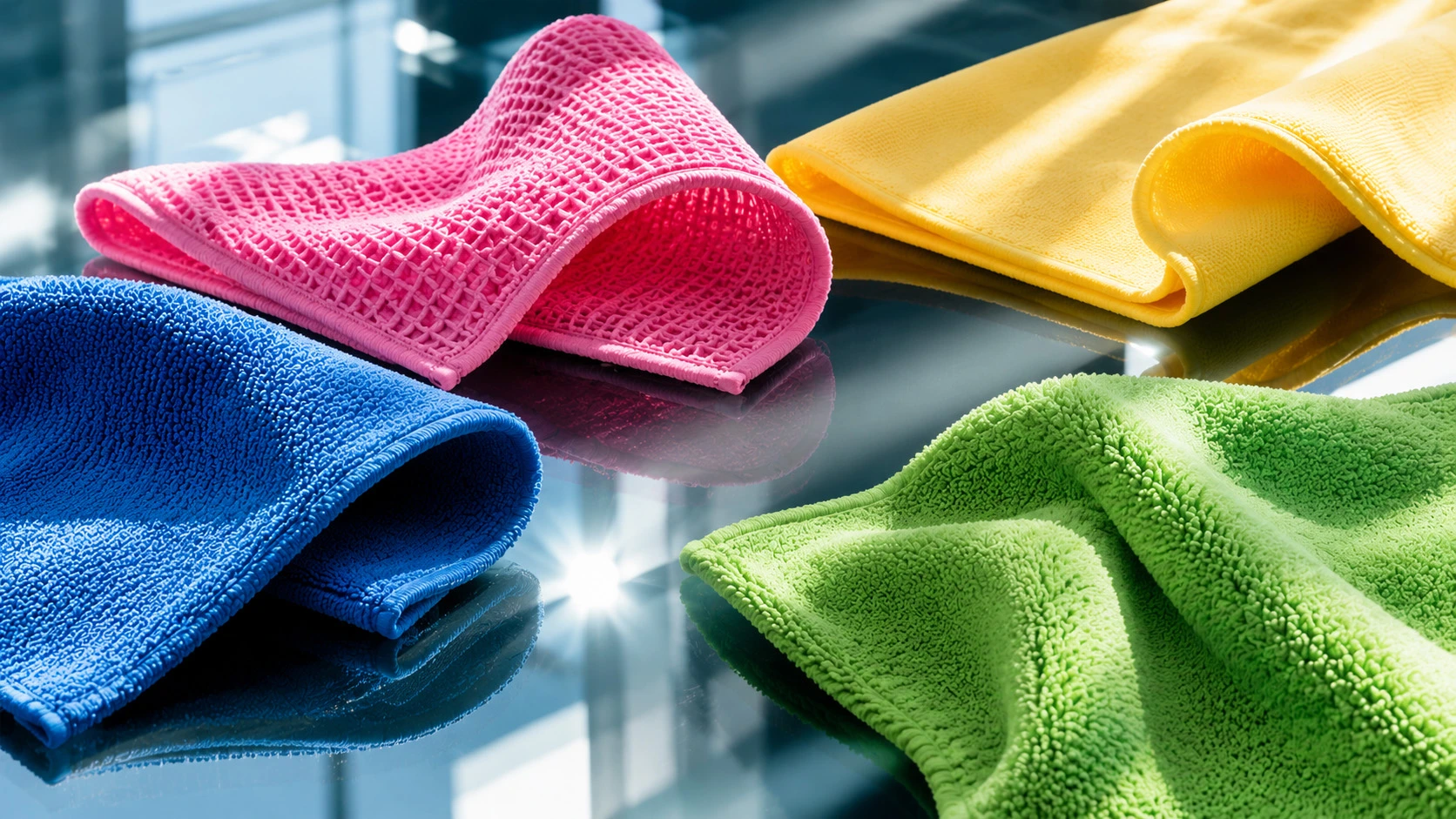
Which Microfiber Cloth Should You Choose for Specific Applications?
For Glass and Windows
Thin microfiber cloths with a dense structure or waffle weave are the best option. They effectively remove dirt without leaving streaks.
For Car Interiors
Soft microfiber cloths with a medium GSM are ideal for removing dust and dirt from dashboards, plastic trim, and upholstery.
For Automotive Paintwork
Softness is the key factor here. A high-quality microfiber cloth helps minimize the risk of micro-scratches during polishing and drying.
For the Kitchen
Universal microfiber cloths handle grease, water, and everyday dirt effectively. They can be used on countertops as well as household appliances.
For Electronics
When cleaning computer monitors, smartphones, or tablets, thin and delicate microfiber cloths are the safest choice because they do not scratch sensitive surfaces.
For Eyeglasses
Very soft cloths with a smooth finish are the best option for removing fingerprints and dirt without damaging the lenses.
The Most Common Mistakes When Using Microfiber
Even the best microfiber cloth can quickly lose its effectiveness if it is not used and maintained properly.
Using Fabric Softener
This is one of the most common mistakes. Fabric softener coats the fibers and significantly reduces their ability to absorb dirt and moisture.
Washing at Excessively High Temperatures
Microfiber does not tolerate high temperatures well. Washing in very hot water can damage the fiber structure.
Washing with Cotton Fabrics
Cotton releases lint that can become trapped in microfiber fibers, causing shedding and reducing cleaning performance.
Drying on a Radiator
Excessive heat may negatively affect the durability and lifespan of the material.
Conclusion
Choosing the right microfiber cloth should not be based solely on price. It is important to consider the fiber composition, GSM weight, and intended application. These factors determine the cloth's absorbency, durability, and overall user experience.
A properly selected microfiber cloth can significantly improve cleaning efficiency, deliver better results, and maintain its performance for a longer period. Whether you use it for vehicle care, window cleaning, or screen maintenance, it is worth investing in a product specifically designed for the task. In the long run, it provides not only greater convenience but also valuable savings in both time and money.